For a bring your own food (mostly) to a picnic in Prospect Park for Obama hosted by yours truly, Brooklyn Green Team. We'll be selling some overpriced baked goods so we can make a donation to the campaign. We'll have some snacks and some food there. Also, try to bring your own silverware from home rather than using disposable.
2pm
3rd Street Entrance to Park, near bar-b-que area behind the Picnic House
We'll have badges that say Brooklyn Green Team
Go to Event
Friday, August 29, 2008

What To Do with Old Business Cards
Admittedly, a strange post, but so many of us have them still and rather than recycle them, here are some ways to extend the life of your business cards:
They're great for making a quick list for a small shopping trip because they slip easily into your pocket but don't scrunch up like a regular paper note does.
Use them for putting personal notes in the lunch bag of someone you love.
Clean the spaces between your keyboard keys. (The sticky end of a used post-it note works good for this also.)
A business card makes a pretty good toothpick in a pinch.
You can use them by the telephone to jot quick notes on.
Glue to nice patterned paper and make place cards for a wedding.
Noisemakers For The Wheels Of Your Child's Bike.
Sources: DIY, Associated Content
Wednesday, August 27, 2008

Tuesday, August 26, 2008
Have Fun While Learning the Extent of Your Destruction!
The Earth Day Network just launched a virtual ecological footprint calculator. We tried it. Its got great music and you can even choose the color of your shirt.
Saturday, August 23, 2008
Disposable Food and Water
The world grows more than enough food to sustain the global population, but half of that food is wasted -- and thus half of the water used in food production is wasted as well, says a new report from the United Nations Food and Agriculture Organization, International Water Management Institute, and Stockholm Water Management Institute. In developing countries, food spoils or is damaged by insects; in developed countries, it's more often just tossed out. The United States and other industrialized countries throw out some 30 percent of their food each year, says the report: "That corresponds to [10.6 trillion gallons] of irrigation water, enough water to meet the household needs of 500 million people." The organizations call for a 50 percent reduction in global food waste by 2025, pointing out that 1 billion people already live with insufficient water. "Unless we change our practices," says the FAO's Pasquale Steduto, "water will be a key constraint to food production in the future." (hmmm. . . remind anyone of the Five-Minute Shower Challenge?)
SOLUTIONS.
Only buy what you need from the grocery store
Bring leftover produce or anything to work - co-workers will eat anything
Eat what you need. Resist the superfluous snack.
Learn More
SOLUTIONS.
Only buy what you need from the grocery store
Bring leftover produce or anything to work - co-workers will eat anything
Eat what you need. Resist the superfluous snack.
Learn More
Wednesday, August 20, 2008
Volunteer for the Environment This Weekend
Join Council on the Environment of NYCand plant a fall vegetable garden near 90th Street and East End Avenue
Saturday, August 23rd and Monday, August 25
email plantlot@aol.com to find out more
Saturday, August 23rd and Monday, August 25
email plantlot@aol.com to find out more
Tuesday, August 19, 2008
Prevent Needless Litter
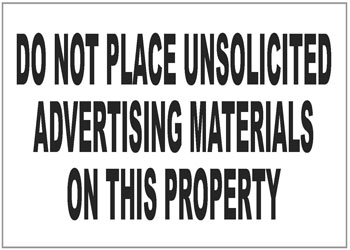
How many times do you walk to your brownstone at night and see ads from the grocery store all over your stoop? There are tons and tons of ads that get placed all over the city which in most cases are a waste of paper. The New York City Department of Sanitation today reminded property owners across the city that starting August 2nd, enforcement will begin of Section 397-A of the New York State General Business Law, a.k.a the "Lawn Litter" Law, which allows property owners to post a sign in a visible area in front of their homes to let advertisers know not to place unsolicited advertising material on their property.
When you do get these ads, make sure to recycle them with your paper. Remember their slogan - "If you can tear it, we can take it"
Download the sign (needs to be laminated). You can also get one through Park Slope Civic Council
Monday, August 18, 2008
Local Vs. Organic
Many of us bound gleefully through the greenmarket, feeling great about our food that came in from Jersey and the Hudson Valley - so close, so local. What this interesting grist article suggests is that in the excitement of buying local food - we forget how the food came to be.
In "Dispatches from the Fields," Ariane Lotti and Stephanie Ogburn, who are working on small farms in Iowa and Colorado this season, share their thoughts on producing real food in the midst of America's agro-industrial landscape.
A few years ago at farmers markets here and around the country, most customers would ask a farmer how she grew her vegetables and herbs. Eaters were concerned about organic growing habits and pesticide use on farms, and inquired about the methods used to grow the produce they were purchasing. Nowadays at market, almost no one asks if Dragonfly Farms is certified organic. (We're not, but are pursuing Certified Naturally Grown status.)
It's troubling because, from the perspective of a movement against agribusiness-as-usual, organic farming has a lot more substance than local does. The organic movement confronted industrial agriculture's use of pesticides, herbicides, and fertilizers that devastated local ecosystems. It addressed the health of migrant farm workers and the health of people who ate foods with pesticide residues or milk with growth hormones. Organic growers tried to imitate natural systems on their farms, and the science of agroecology grew out of this movement. The goal of early organic movement farmers was to one day feed the world through a system of cultivation that paid attention to landscape, ecology, and human health. Today, movement-style organic agriculture in the United States has largely disappeared, and its substitution, from a perspective of ecological or moral consumerism, has become the term "local."
For me, there are a few important reasons for buying locally. Food is fresher and tastes better. Buying local food supports the hometown economy. Buying locally shortens the commodity chain, which opens up space for consumers to hold producers accountable for methods of production (which can range from use of pesticides to paying their laborers a fair wage). It also enhances the chance that producers will be fairly and adequately compensated for what they produce. (Think about the percentage of a dollar a tomato grower at farmers market keeps for a pound of her product versus the percentage a coffee farmer from Guatemala keeps for a pound of hers.)
I find this problematic, mostly because a focus on buying locally avoids a critique of industrial agriculture from all perspectives except that of transportation. Theoretically, then, if one grew apples in Connecticut, using tons of pesticides (and believe me, tons of pesticides are used on apples), and employed poorly paid, undocumented workers who were exposed to said pesticides, but sold them within Connecticut to local consumers, these apples would be "better" than organic apples shipped from New Zealand.
I'm not particularly interested in debating whether local food is more climate-friendly than regional or even internationally traded food, however. What concerns me most is that the alternative food movement has dropped out of its engagement with the way most of the food in this country is grown. I've watched this happen, as organic first became just another marketing sticker on a product, then faded into obscurity as local become the latest alt-ag end goal.
What does this mean for you? Ask Ask Ask - how was my food grown? Do you use lots of chemicals?
It's just as important as Where was it grown!
Read On
Friday, August 15, 2008
 An interview with Ike Rodriguez- Owner of Samples for (eco)mpassion
How did you come up with the concept for your store?
Ike: The (eco)mpassion concept is a rebirth of my last business Find Outlet, a chain of designer outlet stores. I wanted to have a socially conscious business. Ive tried everything to change my last business, the point of giving it all up, only to come back to it in this new way.
Are you a die-hard environmentalist yourself? If so, what are some of the things you practice?
Ike: Yes im pretty die hard. I live on a sailboat and and RV so I know how to live on very little. My energy comes from 12volt batteries and I use 150 gallons of water a month, most people use 150 gallons a day for there everyday needs. Living this way opened me up to a consciuosness of abundance, It takes very little to live whole.
Who is your audience - those that come in for the deals or those who sought you out for your environmentally responsible approach?
Ike: Good question. My audience??? Some people just come in for the deal and are not even aware of what im doing. Others, like yourself express your acknowledgment and support which keeps me going. But if I can help one person wake up every now and again, thats good enough.
What do you do with your overstock?
Ike: I dont have much overstock so I dont have an issue.
Will you join the Brooklyn Green Team Five-Minute Shower Challenge?
Ike: Of course I will join the 5 Minute shower. Im already there
Thanks Ike!
Check out the shop on Great Jones and Ike's spot on Fox News!
Wednesday, August 13, 2008
Paper Cuts
Each of us throws away, on average, a quarter of a ton of paper every year. Globally, 70% of the 335 million tons of paper the world uses each year comes from natural, un-farmed sources.
How to save the trees
* Do not pick up paper napkins in cafés.
* Ask yourself: do I need to print this? If so, use both sides of the paper.
* Make sure any paper you buy (toilet rolls through to writing paper) comes from recycled sources.
* Re-use paper bags or compost receipts and torn-up bank statements
* Cut down on and share magazines, return unwanted catalogues to the sender.
* Ask your boss to buy recycled paper for your workplace.
Pulp facts
* Deforestation caused by paper production is thought to be a bigger cause of global warming than transport.
* It is a myth that most paper comes from sustainable sources. Seventy per cent of it comes from natural forests
* Around 75 per cent of the paper for magazines is production wastage and is never read.
* Advertisers know that 99.7 per cent of recipients of junk mail throw it away unread. They think it's worth it for the 0.3 per cent who might.
Learn More at The Independent
Tuesday, August 12, 2008
A Car-Free Prospect Park

Print out and sign this postcard and send it to our Mayor at City Hall.

Or visit carfreeprospectpark.org and become a volunteer.
Monday, August 11, 2008
Planting Your Bulbs
They're great. They save you money on your ConEd each month. They're not as hot. They're super bright (not always the most flattering though). Most importantly - they are better for the environment. Here are some suggestions on recycling them.
While increasingly more retailers are selling compact fluorescent lightbulbs (CFLs), options for recycling spent bulbs have been few and far between. But the number of drop-off sites jumped by nearly 2,000 this past June when the Home Depot, the nation’s largest home improvement retailer, started a free CFL collecting/recycling program at each of its U.S. stores; a similar program at Canadian stores started last fall. Currently, Ikea is the only other retailer to collect the bulbs nationally. CFLs should be recycled so that the mercury they contain isn't released into the environment. Each bulb contains about 5 milligrams or less of mercury, a neurotoxin, or about 1 percent of the amount in an old-fashioned thermometer.
Solutions!
Bring spent, unbroken CFLs to Home Depot or Ikea. There’s no fee, and the stores will accept any CFLs, even those you didn’t buy from them.
Ace Hardware also collects CFLs at select locations.
Sylvania has a mail-in program, but it's pricey. See The bulb is in the mail.
You can drop them at a NYC Department of Sanitation CFL and other special waste drop-off site:
BROOKLYN: Bay 41st Street and Gravesend Bay, south of the Belt Parkway (adjacent to the DSNY Brooklyn 11 garage).
MANHATTAN: DSNY garage at 605 West 30th Street, between 11th & 12th Avenue.
Here's when you can do it in 08:
August 2008
August 2, 9, 16, 23, August 29
September 2008
September 6, 13, 20, 26
October 2008
October 4, 11, 18, 25, 31
November 2008
November 8, 15, 22, 28
December 2008
December 6, 13, 20, 26
*Please note: Special Waste sites will not be open November 1
The Special Waste Drop-off Sites operate on a “do-it-yourself” basis. Department personnel will then instruct residents to empty their Special Wastes into labeled storage containers. After emptying their Special Wastes, residents are expected to deposit their empty paint cans, corrugated cardboard, and any trash into designated containers for proper recycling and/or disposal.
Also, as a last resort - hang on to them. Changes are CFL recycling will become more widely available in NYC soon.
Source: Consumer Report's GreenerChoices
Subscribe to:
Posts (Atom)